ShopDreamUp AI ArtDreamUp
Deviation Actions


Description
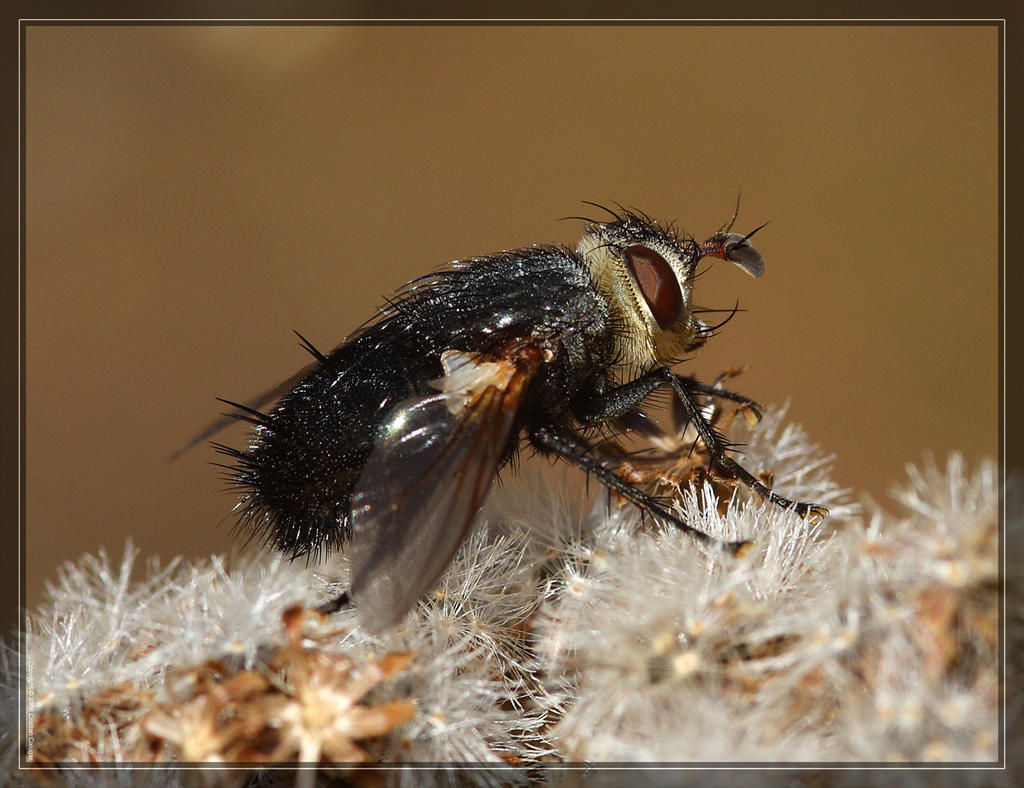
Tachinid Fly (Pararchytas decisus)
Tachinidae is a large and rather variable family of true flies within the insect order Diptera, with more than 8,200 known species and many more to be discovered. There are over 1300 species in North America. Insects in this family are commonly called tachina flies, or simply "tachinids". They occur in almost all habitats all over the world.
A typical characteristic of this family is the fact that most of them are parasitoids (the larvae develop inside a living host, ultimately killing it), and a few are parasitic (do not kill the host). Larvae are endoparasites (internal parasites) of caterpillars of butterflies and moths, adult and larval beetles, sawfly larvae, various types of true bugs and grasshoppers, rarely in centipedes, with usually only one grub. Some species are being used in biological pest control. Many species of tachinid flies have been introduced into North America from their native lands as biocontrols to suppress populations of alien pests.
Tachinid flies are extremely varied in appearance. Adult flies may be brilliantly colored and then resemble blow-flies (family Calliphoridae), or rather drab, and then resemble house flies. But tachinid flies are more bristly and more robust. They have three-segmented antennae, a diagnostically prominent postscutellum bulging beneath the scutellum (a segment of the mesonotum), bare (sometimes plumose) arista. The calypters (small flaps above the halteres) are usually very large. Their fourth long vein bends away sharply.
Adult flies feed on flowers and nectar from aphids and scales. As many species typically feed on pollen, they can be important pollinators of some plants, especially at higher elevations in mountains where bees decrease in numbers.
More info: [link]
Thanks to the talented Judy for helping me identify this one. She has a beautiful gallery!
Tachinidae is a large and rather variable family of true flies within the insect order Diptera, with more than 8,200 known species and many more to be discovered. There are over 1300 species in North America. Insects in this family are commonly called tachina flies, or simply "tachinids". They occur in almost all habitats all over the world.
A typical characteristic of this family is the fact that most of them are parasitoids (the larvae develop inside a living host, ultimately killing it), and a few are parasitic (do not kill the host). Larvae are endoparasites (internal parasites) of caterpillars of butterflies and moths, adult and larval beetles, sawfly larvae, various types of true bugs and grasshoppers, rarely in centipedes, with usually only one grub. Some species are being used in biological pest control. Many species of tachinid flies have been introduced into North America from their native lands as biocontrols to suppress populations of alien pests.
Tachinid flies are extremely varied in appearance. Adult flies may be brilliantly colored and then resemble blow-flies (family Calliphoridae), or rather drab, and then resemble house flies. But tachinid flies are more bristly and more robust. They have three-segmented antennae, a diagnostically prominent postscutellum bulging beneath the scutellum (a segment of the mesonotum), bare (sometimes plumose) arista. The calypters (small flaps above the halteres) are usually very large. Their fourth long vein bends away sharply.
Adult flies feed on flowers and nectar from aphids and scales. As many species typically feed on pollen, they can be important pollinators of some plants, especially at higher elevations in mountains where bees decrease in numbers.
More info: [link]
Thanks to the talented Judy
for helping me identify this one. She has a beautiful gallery! Image size
3939x3030px 5.84 MB
Make
Canon
Model
Canon EOS 40D
Shutter Speed
1/332 second
Aperture
F/9.0
Focal Length
105 mm
ISO Speed
200
Date Taken
Nov 8, 2008, 10:59:15 AM
© 2008 - 2024 Cristian-M
Comments7
Join the community to add your comment. Already a deviant? Log In

ew, yuck, not an attractive critter....LOLnice shot tho.